
h2benchw gehört zur Tool-Sammlung vom vom Magazin für Computertechnik (c't) aus dem Heise Verlag. Das von der Optik her eher spartanische Programm liefert eine Reihe von synthetischen und praxisorientierten Messwerten, die im Einzelnen wie folgt aussehen: Sequentielles Lesen/Schreiben, mittlere Zugriffszeit Lesen/Schreiben und verschiedene Anwendungsprofile (siehe nächste Seite). Wenn der Schreibzugriff auf das Zielmedium aktiviert werden soll, darf keine Partition auf dem zu testenden Laufwerk vorhanden sein. Dies ist darin begründet, da h2benchw unabhängig von einem Dateisystem arbeitet.
| read, Mittelwert | |
| Samsung SSD 840 EVO, 1 TB | 429,01 |
| Plextor M5 Pro Xtreme, 128 GB | 421,85 |
| Plextor M6S, 256 GB | 418,81 |
| Crucial M500 SSD, 480 GB | 418,57 |
| Plextor M5 Pro Xtreme, 256 GB | 404,97 |
| Intel SSD 335 Series, 240 GB | 401,55 |
| ADATA XPG SX900, 256 GB | 379,12 |
| OCZ Vector 150, 120 GB | 331,33 |
| OCZ Vector 150, 480 GB | 330,21 |
| OCZ Vertex 460, 480 GB | 319,76 |
| OCZ Vertex 460, 240 GB | 317,45 |
| OCZ ARC 100, 240 GB | 305,06 |
| ADATA Premier Pro SP900, 256 GB | 283,29 |
| Kingston HyperX 3K SSD, 120 GB | 260,12 |
| Plextor M5S, 256 GB | 236,95 |
| Kingston SSDNow V300, 120 GB | 231,37 |
| Angaben in MB/sec (mehr ist besser) | |
| write, Mittelwert | |
| Intel SSD 335 Series, 240 GB | 397,78 |
| OCZ Vertex 460, 240 GB | 380,35 |
| OCZ Vector 150, 120 GB | 380,18 |
| ADATA XPG SX900, 256 GB | 379,43 |
| Kingston SSDNow V300, 120 GB | 379,13 |
| ADATA Premier Pro SP900, 256 GB | 376,88 |
| Crucial M500 SSD, 480 GB | 368,37 |
| OCZ Vector 150, 480 GB | 366,12 |
| OCZ Vertex 460, 480 GB | 364,49 |
| Plextor M6S, 256 GB | 359,75 |
| OCZ ARC 100, 240 GB | 341,49 |
| Kingston HyperX 3K SSD, 120 GB | 330,99 |
| Plextor M5 Pro Xtreme, 128 GB | 313,19 |
| Plextor M5 Pro Xtreme, 256 GB | 275,97 |
| Plextor M5S, 256 GB | 214,59 |
| Samsung SSD 840 EVO, 1 TB | 163,21 |
| Angaben in MB/sec (mehr ist besser) | |
| read, Mittelwert | |
| Samsung SSD 840 EVO, 1 TB | 426,39 |
| Plextor M6S, 256 GB | 391,90 |
| Plextor M5 Pro Xtreme, 128 GB | 387,91 |
| Plextor M5 Pro Xtreme, 256 GB | 373,76 |
| OCZ Vector 150, 480 GB | 361,55 |
| OCZ Vertex 460, 480 GB | 360,76 |
| OCZ Vector 150, 120 GB | 358,05 |
| OCZ Vertex 460, 240 GB | 348,96 |
| Intel SSD 335 Series, 240 GB | 329,12 |
| ADATA XPG SX900, 256 GB | 318,47 |
| ADATA Premier Pro SP900, 256 GB | 312,16 |
| Kingston HyperX 3K SSD, 120 GB | 270,73 |
| OCZ ARC 100, 240 GB | 264,53 |
| Crucial M500 SSD, 480 GB | 237,24 |
| Plextor M5S, 256 GB | 227,76 |
| Kingston SSDNow V300, 120 GB | 224,89 |
| Angaben in MB/sec (mehr ist besser) | |
| write, Mittelwert | |
| OCZ Vector 150, 480 GB | 410,21 |
| OCZ Vertex 460, 480 GB | 408,24 |
| Intel SSD 335 Series, 240 GB | 398,87 |
| ADATA XPG SX900, 256 GB | 380,82 |
| Samsung SSD 840 EVO, 1 TB | 379,50 |
| Crucial M500 SSD, 480 GB | 365,20 |
| Kingston SSDNow V300, 120 GB | 364,54 |
| Plextor M6S, 256 GB | 349,13 |
| Kingston HyperX 3K SSD, 120 GB | 332,76 |
| Plextor M5 Pro Xtreme, 128 GB | 315,00 |
| ADATA Premier Pro SP900, 256 GB | 289,51 |
| OCZ Vertex 460, 240 GB | 277,99 |
| Plextor M5 Pro Xtreme, 256 GB | 273,25 |
| OCZ ARC 100, 240 GB | 268,87 |
| Plextor M5S, 256 GB | 216,23 |
| OCZ Vector 150, 120 GB | 183,46 |
| Angaben in MB/sec (mehr ist besser) | |
| read, Mittelwert | |
| OCZ ARC 100, 240 GB | 0,10 |
| OCZ Vector 150, 120 GB | 0,10 |
| OCZ Vector 150, 480 GB | 0,10 |
| OCZ Vertex 460, 240 GB | 0,11 |
| OCZ Vertex 460, 480 GB | 0,11 |
| Plextor M5 Pro Xtreme, 128 GB | 0,11 |
| Plextor M5 Pro Xtreme, 256 GB | 0,11 |
| Plextor M6S, 256 GB | 0,11 |
| Samsung SSD 840 EVO, 1 TB | 0,11 |
| Plextor M5S, 256 GB | 0,12 |
| Crucial M500 SSD, 480 GB | 0,15 |
| ADATA Premier Pro SP900, 256 GB | 0,18 |
| Intel SSD 335 Series, 240 GB | 0,19 |
| Kingston HyperX 3K SSD, 120 GB | 0,19 |
| ADATA XPG SX900, 256 GB | 0,20 |
| Kingston SSDNow V300, 120 GB | 0,24 |
| Angaben in Millisekunden (weniger ist besser) | |
| write, Mittelwert | |
| OCZ Vector 150, 480 GB | 0,04 |
| OCZ Vector 150, 120 GB | 0,05 |
| OCZ Vertex 460, 240 GB | 0,05 |
| OCZ Vertex 460, 480 GB | 0,05 |
| Plextor M5 Pro Xtreme, 256 GB | 0,05 |
| Plextor M5S, 256 GB | 0,05 |
| Samsung SSD 840 EVO, 1 TB | 0,05 |
| Crucial M500 SSD, 480 GB | 0,06 |
| Plextor M5 Pro Xtreme, 128 GB | 0,06 |
| Plextor M6S, 256 GB | 0,06 |
| OCZ ARC 100, 240 GB | 0,12 |
| Intel SSD 335 Series, 240 GB | 0,20 |
| ADATA XPG SX900, 256 GB | 0,21 |
| Kingston HyperX 3K SSD, 120 GB | 0,23 |
| ADATA Premier Pro SP900, 256 GB | 0,28 |
| Kingston SSDNow V300, 120 GB | 0,31 |
| Angaben in Millisekunden (weniger ist besser) | |
KIOXIA hat mit der LD4-Serie seine ersten SSDs im E1.L-Formfaktor auf Basis der achten Generation des BiCS FLASH QLC vorgestellt....
devolo bringt mit dem WiFi 7 BE9300 einen neuen Tri-Band-Router auf den Markt, der sich als Ethernet-Router für Glasfaseranschlüsse, Access...
BenQ erweitert seine MOBIUZ-Serie um den EX271QMZ. Der 26,5 Zoll große Gaming-Monitor setzt auf ein QD-OLED-Panel der dritten Generation mit...
Mit der E100 1 TB SSD hält Crucial eine preisorientierte NVMe-SSD mit PCIe 4.0 x4 bereit. Das M.2-2280-Laufwerk soll laut...
Im zurückliegenden Monat gab es wieder einige spannende Themen im Bereich Newsmeldungen sowie interessante Artikel und Produkttests. Folgend möchten wir...
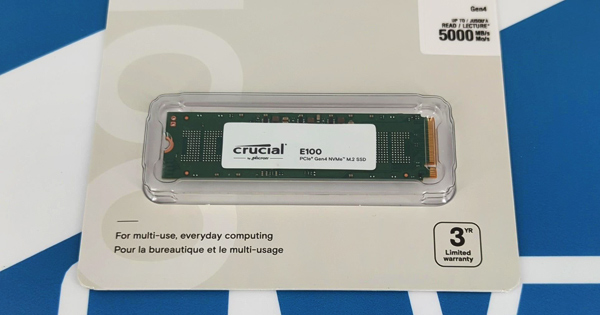
Die E100-SSD von Crucial basiert auf einem PCIe Gen4 Interface und QLC-Flashspeicher von Micron. Die Serie zielt auf Ein- und Umsteiger in die SSD-Welt ab. Wir haben uns das 1-TB-Modell im Test angesehen.
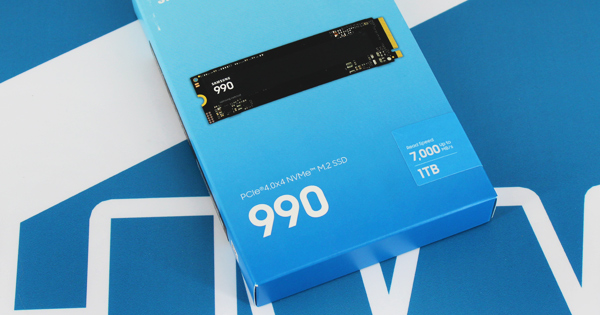
Mit der SSD-990-Familie stellt Samsung eine neue Serie von SSDs für Einsteiger vor. Wie sich die Kombination aus PCI Express Gen4 und QLC-Flashspeicher in der Praxis schlägt, klären wir am 1-TB-Modell.
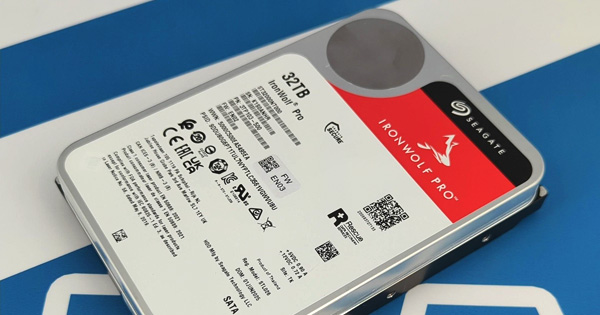
Die Familie der IronWolf Pro Festplatten von Hersteller Seagate adressiert vor allem NAS-Systeme im Profi-Segment. Wir haben uns das aktuelle Flaggschiff der CMR-Plattform mit satten 32 TB im Praxistest zur Brust genommen.