
Die vier synthetischen Tests des AS SSD-Benchmarks ermitteln die sequentielle und zufällige Lese- und Schreibgeschwindigkeit unserer Testprobanden. Diese Tests werden ohne Nutzung des Betriebssystem-Caches durchgeführt. In den sequentiellen Tests misst das Programm wie lange es dauert, eine 1 GB große Datei zu lesen respektive zu schreiben. Im 4K-Test wird die Lese- und Schreibleistung bei zufällig ausgewählten 4K-Blöcken ermittelt. Der 4K-64-Thrd-Test entspricht dem 4K-Prozedere, nur dass in diesem Fall die Lese-und Schreiboperationen auf 64 Threads verteilt sind. Damit wird der typische Start eines Programms bzw. Prozesses simuliert.
Zuletzt wird noch die Zugriffszeit der SSD ermittelt, wobei der Zugriff beim Lesen über die gesamte Kapazität der SSD (Fullstroke) ermittelt wird. Der Schreibzugriffstest erfolgt mit einer 1 GB-Testdatei.
| read, Mittelwert | |
| Intel SSD 750 Series, 1.2 TB (PCIe 3.0 x4) | 2.275,06 |
| ZOTAC Sonix, 480 GB (PCIe 3.0 x4) | 2.182,49 |
| Kingston HyperX Predator, 480 GB (PCIe 2.0 x4) | 1.331,04 |
| Plextor M6e Black, 256 GB (PCIe 2.0 x2) | 677,99 |
| OCZ TR150, 480 GB | 526,71 |
| ZOTAC Premium SSD, 240 GB | 524,83 |
| Plextor M6V, 256 GB | 524,75 |
| Toshiba Q300, 240 GB | 524,67 |
| OCZ Trion 100, 960 GB | 524,10 |
| Kingston HyperX Savage SSD, 480 GB | 521,02 |
| Plextor M7V, 256 GB | 520,47 |
| Toshiba Q-Series Pro, 256 GB | 514,77 |
| Toshiba Q300 Pro, 256 GB | 514,61 |
| Toshiba Q300 Pro, 128 GB | 513,14 |
| OCZ Vector 180, 240 GB | 506,08 |
| Angaben in MB/sec (mehr ist besser) | |
| write, Mittelwert | |
| ZOTAC Sonix, 480 GB (PCIe 3.0 x4) | 1.287,07 |
| Intel SSD 750 Series, 1.2 TB (PCIe 3.0 x4) | 1.216,89 |
| Kingston HyperX Predator, 480 GB (PCIe 2.0 x4) | 614,05 |
| Plextor M6e Black, 256 GB (PCIe 2.0 x2) | 549,37 |
| OCZ TR150, 480 GB | 502,85 |
| Kingston HyperX Savage SSD, 480 GB | 502,74 |
| ZOTAC Premium SSD, 240 GB | 500,59 |
| OCZ Vector 180, 240 GB | 487,68 |
| Toshiba Q-Series Pro, 256 GB | 476,47 |
| Toshiba Q300, 240 GB | 474,55 |
| Toshiba Q300 Pro, 256 GB | 473,99 |
| Toshiba Q300 Pro, 128 GB | 469,73 |
| Plextor M7V, 256 GB | 439,55 |
| OCZ Trion 100, 960 GB | 385,69 |
| Plextor M6V, 256 GB | 344,49 |
| Angaben in MB/sec (mehr ist besser) | |
| read, Mittelwert | |
| ZOTAC Sonix, 480 GB (PCIe 3.0 x4) | 53,76 |
| ZOTAC Premium SSD, 240 GB | 53,51 |
| OCZ Vector 180, 240 GB | 47,91 |
| OCZ TR150, 480 GB | 46,26 |
| Kingston HyperX Savage SSD, 480 GB | 45,56 |
| OCZ Trion 100, 960 GB | 44,71 |
| Plextor M7V, 256 GB | 41,61 |
| Intel SSD 750 Series, 1.2 TB (PCIe 3.0 x4) | 41,34 |
| Kingston HyperX Predator, 480 GB (PCIe 2.0 x4) | 39,09 |
| Toshiba Q300, 240 GB | 37,35 |
| Plextor M6V, 256 GB | 36,85 |
| Plextor M6e Black, 256 GB (PCIe 2.0 x2) | 34,72 |
| Toshiba Q-Series Pro, 256 GB | 24,18 |
| Toshiba Q300 Pro, 256 GB | 24,05 |
| Toshiba Q300 Pro, 128 GB | 23,50 |
| Angaben in MB/sec (mehr ist besser) | |
| write, Mittelwert | |
| ZOTAC Sonix, 480 GB (PCIe 3.0 x4) | 187,10 |
| OCZ Vector 180, 240 GB | 138,09 |
| Plextor M6V, 256 GB | 123,85 |
| Toshiba Q300 Pro, 256 GB | 123,57 |
| Toshiba Q-Series Pro, 256 GB | 122,30 |
| Toshiba Q300 Pro, 128 GB | 121,95 |
| Kingston HyperX Savage SSD, 480 GB | 118,75 |
| ZOTAC Premium SSD, 240 GB | 114,90 |
| OCZ TR150, 480 GB | 111,89 |
| OCZ Trion 100, 960 GB | 110,63 |
| Plextor M7V, 256 GB | 101,83 |
| Kingston HyperX Predator, 480 GB (PCIe 2.0 x4) | 100,05 |
| Toshiba Q300, 240 GB | 98,22 |
| Plextor M6e Black, 256 GB (PCIe 2.0 x2) | 93,22 |
| Intel SSD 750 Series, 1.2 TB (PCIe 3.0 x4) | 90,65 |
| Angaben in MB/sec (mehr ist besser) | |
| read, Mittelwert | |
| Intel SSD 750 Series, 1.2 TB (PCIe 3.0 x4) | 1.417,09 |
| ZOTAC Sonix, 480 GB (PCIe 3.0 x4) | 856,96 |
| Kingston HyperX Predator, 480 GB (PCIe 2.0 x4) | 431,55 |
| Plextor M6e Black, 256 GB (PCIe 2.0 x2) | 389,62 |
| OCZ Vector 180, 240 GB | 378,73 |
| Kingston HyperX Savage SSD, 480 GB | 378,63 |
| OCZ Trion 100, 960 GB | 375,15 |
| ZOTAC Premium SSD, 240 GB | 373,88 |
| Toshiba Q300, 240 GB | 358,65 |
| Toshiba Q-Series Pro, 256 GB | 352,66 |
| Toshiba Q300 Pro, 128 GB | 351,84 |
| Toshiba Q300 Pro, 256 GB | 351,55 |
| Plextor M7V, 256 GB | 337,54 |
| Plextor M6V, 256 GB | 308,78 |
| OCZ TR150, 480 GB | 136,81 |
| Angaben in MB/sec (mehr ist besser) | |
| write, Mittelwert | |
| Intel SSD 750 Series, 1.2 TB (PCIe 3.0 x4) | 1.089,48 |
| ZOTAC Sonix, 480 GB (PCIe 3.0 x4) | 648,56 |
| Plextor M6e Black, 256 GB (PCIe 2.0 x2) | 332,33 |
| ZOTAC Premium SSD, 240 GB | 294,08 |
| OCZ TR150, 480 GB | 293,12 |
| OCZ Trion 100, 960 GB | 292,58 |
| OCZ Vector 180, 240 GB | 290,80 |
| Kingston HyperX Predator, 480 GB (PCIe 2.0 x4) | 284,03 |
| Kingston HyperX Savage SSD, 480 GB | 278,00 |
| Plextor M6V, 256 GB | 256,32 |
| Plextor M7V, 256 GB | 241,47 |
| Toshiba Q300 Pro, 256 GB | 213,69 |
| Toshiba Q-Series Pro, 256 GB | 212,69 |
| Toshiba Q300 Pro, 128 GB | 195,18 |
| Toshiba Q300, 240 GB | 97,42 |
| Angaben in MB/sec (mehr ist besser) | |
| read, Mittelwert | |
| Kingston HyperX Savage SSD, 480 GB | 0,03 |
| OCZ Trion 100, 960 GB | 0,03 |
| OCZ Vector 180, 240 GB | 0,03 |
| Plextor M6V, 256 GB | 0,03 |
| Plextor M6e Black, 256 GB (PCIe 2.0 x2) | 0,03 |
| Plextor M7V, 256 GB | 0,03 |
| Toshiba Q300, 240 GB | 0,03 |
| Intel SSD 750 Series, 1.2 TB (PCIe 3.0 x4) | 0,04 |
| ZOTAC Premium SSD, 240 GB | 0,04 |
| Kingston HyperX Predator, 480 GB (PCIe 2.0 x4) | 0,10 |
| Toshiba Q300 Pro, 256 GB | 0,14 |
| ZOTAC Sonix, 480 GB (PCIe 3.0 x4) | 0,15 |
| Toshiba Q-Series Pro, 256 GB | 0,20 |
| Toshiba Q300 Pro, 128 GB | 0,21 |
| OCZ TR150, 480 GB | 0,24 |
| Angaben in Millisekunden (weniger ist besser) | |
| write, Mittelwert | |
| Kingston HyperX Savage SSD, 480 GB | 0,03 |
| OCZ TR150, 480 GB | 0,03 |
| OCZ Trion 100, 960 GB | 0,03 |
| OCZ Vector 180, 240 GB | 0,03 |
| Toshiba Q-Series Pro, 256 GB | 0,03 |
| Toshiba Q300 Pro, 256 GB | 0,03 |
| ZOTAC Sonix, 480 GB (PCIe 3.0 x4) | 0,03 |
| Intel SSD 750 Series, 1.2 TB (PCIe 3.0 x4) | 0,04 |
| Plextor M6V, 256 GB | 0,04 |
| Plextor M6e Black, 256 GB (PCIe 2.0 x2) | 0,04 |
| Toshiba Q300 Pro, 128 GB | 0,04 |
| Plextor M7V, 256 GB | 0,05 |
| Kingston HyperX Predator, 480 GB (PCIe 2.0 x4) | 0,06 |
| ZOTAC Premium SSD, 240 GB | 0,14 |
| Toshiba Q300, 240 GB | 0,24 |
| Angaben in Millisekunden (weniger ist besser) | |
KIOXIA hat mit der LD4-Serie seine ersten SSDs im E1.L-Formfaktor auf Basis der achten Generation des BiCS FLASH QLC vorgestellt....
devolo bringt mit dem WiFi 7 BE9300 einen neuen Tri-Band-Router auf den Markt, der sich als Ethernet-Router für Glasfaseranschlüsse, Access...
BenQ erweitert seine MOBIUZ-Serie um den EX271QMZ. Der 26,5 Zoll große Gaming-Monitor setzt auf ein QD-OLED-Panel der dritten Generation mit...
Mit der E100 1 TB SSD hält Crucial eine preisorientierte NVMe-SSD mit PCIe 4.0 x4 bereit. Das M.2-2280-Laufwerk soll laut...
Im zurückliegenden Monat gab es wieder einige spannende Themen im Bereich Newsmeldungen sowie interessante Artikel und Produkttests. Folgend möchten wir...
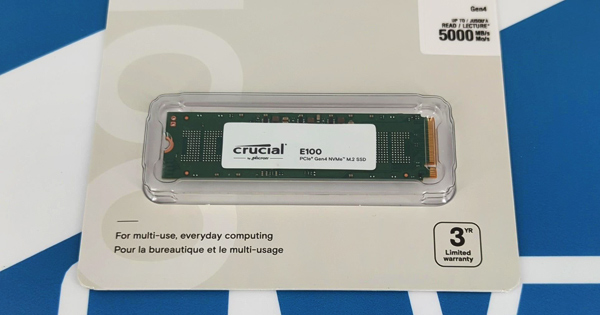
Die E100-SSD von Crucial basiert auf einem PCIe Gen4 Interface und QLC-Flashspeicher von Micron. Die Serie zielt auf Ein- und Umsteiger in die SSD-Welt ab. Wir haben uns das 1-TB-Modell im Test angesehen.
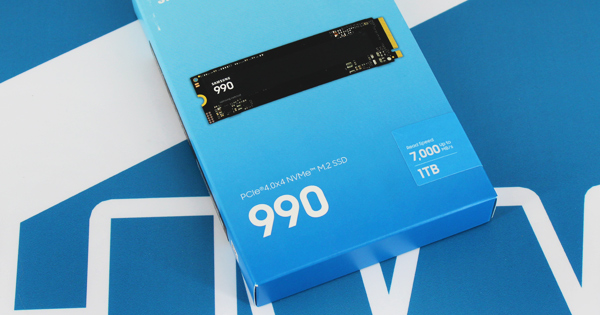
Mit der SSD-990-Familie stellt Samsung eine neue Serie von SSDs für Einsteiger vor. Wie sich die Kombination aus PCI Express Gen4 und QLC-Flashspeicher in der Praxis schlägt, klären wir am 1-TB-Modell.
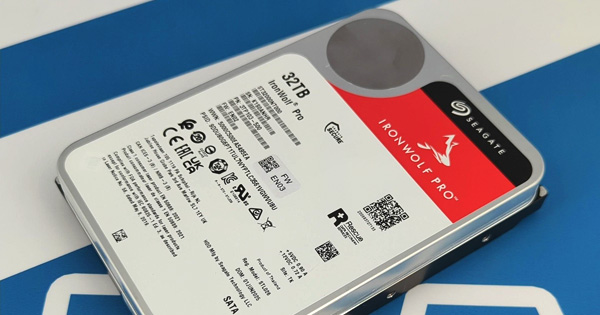
Die Familie der IronWolf Pro Festplatten von Hersteller Seagate adressiert vor allem NAS-Systeme im Profi-Segment. Wir haben uns das aktuelle Flaggschiff der CMR-Plattform mit satten 32 TB im Praxistest zur Brust genommen.